
Pottawatomie County Arrest Records and Court Charges
An arrest record is the record of the arrest itself. It notes who made the arrest, when it happened, and the booking that followed. In Pottawatomie County, the Sheriff's Office and city police agencies create these records, and the jail logs the booking. An arrest record does not prove guilt. It only shows that a person was taken into custody. The booking detail and the current jail roster live with the jail, so the county inmate records page is the better source for who is in custody right now.
The court charge record is a different thing. After an arrest, the District Attorney reviews the case and decides what to file. Those charges are filed with the County Court Clerk and tracked through the District Court. This is where court charges after arrest take shape, change, and resolve. The charge record shows each offense, its statute, and its status. For the full case file, the pleas, and the final sentence, see the county criminal court records page.
How to Find Pottawatomie County Arrest Records and Charges
The court charge side is searchable through two free state portals. The Oklahoma State Courts Network, called OSCN, and On Demand Court Records, called ODCR, both carry District Court cases for the county. You search by defendant name or case number, then open the case to read the charge list. The arrest and booking side comes from law enforcement, mainly the Sheriff's Office.
- Open the OSCN docket search, or open ODCR if OSCN shows a verification screen.
- Search by the defendant's name, or paste a full case number.
- Open the case and read the charge list under the offense or cause field.
- Check each charge's statute, level, and current status.
Arrest reports, records checks, and related photos come from the Sheriff's Office, not the court portal. The Sheriff publishes contact details and an electronic records request channel. Start at the Pottawatomie County Sheriff's Office page.
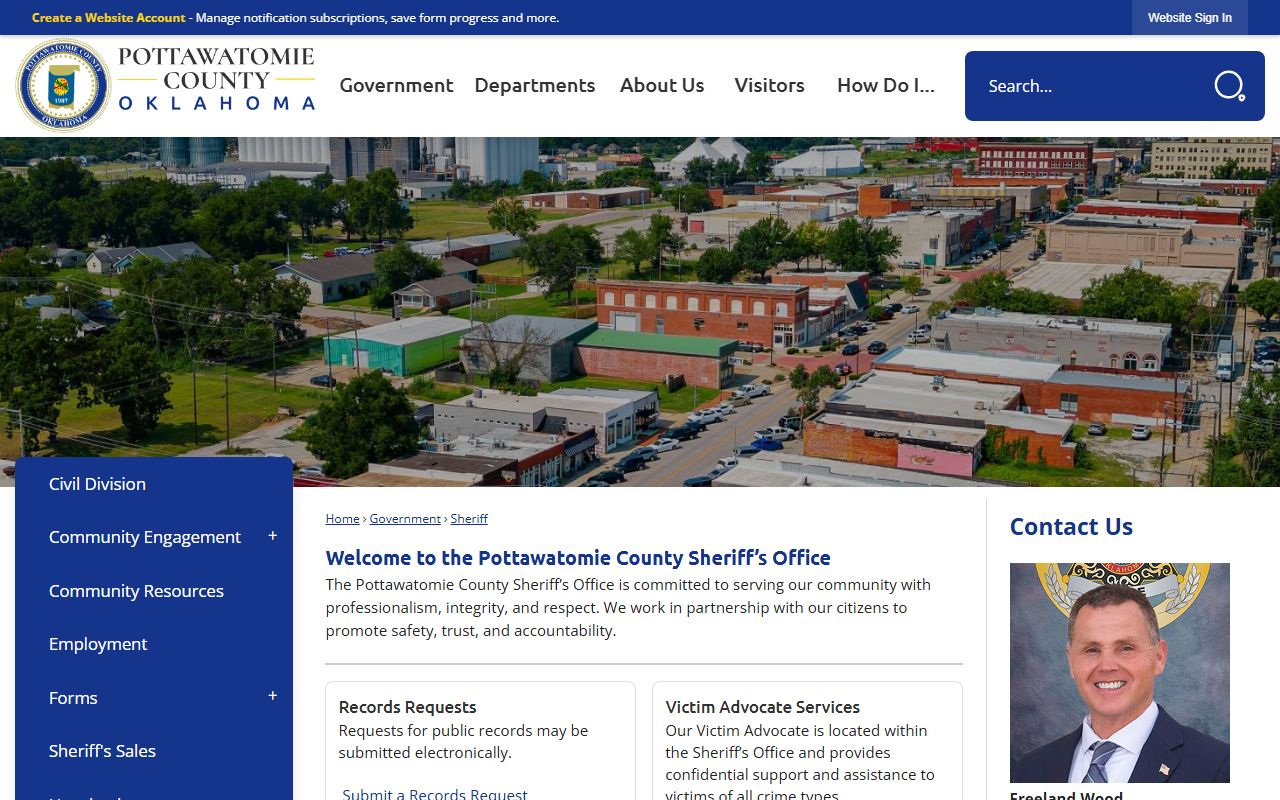
The Sheriff page links a web form for records, lists the dispatch line, and points to OffenderWatch for offender alerts. Active warrant detail may be limited for officer safety, so some requests route through staff. To ask for an arrest report or a records check, use the electronic form.
The form sets out the fields a requester must complete. Submit a request through the Sheriff's Office records request form.
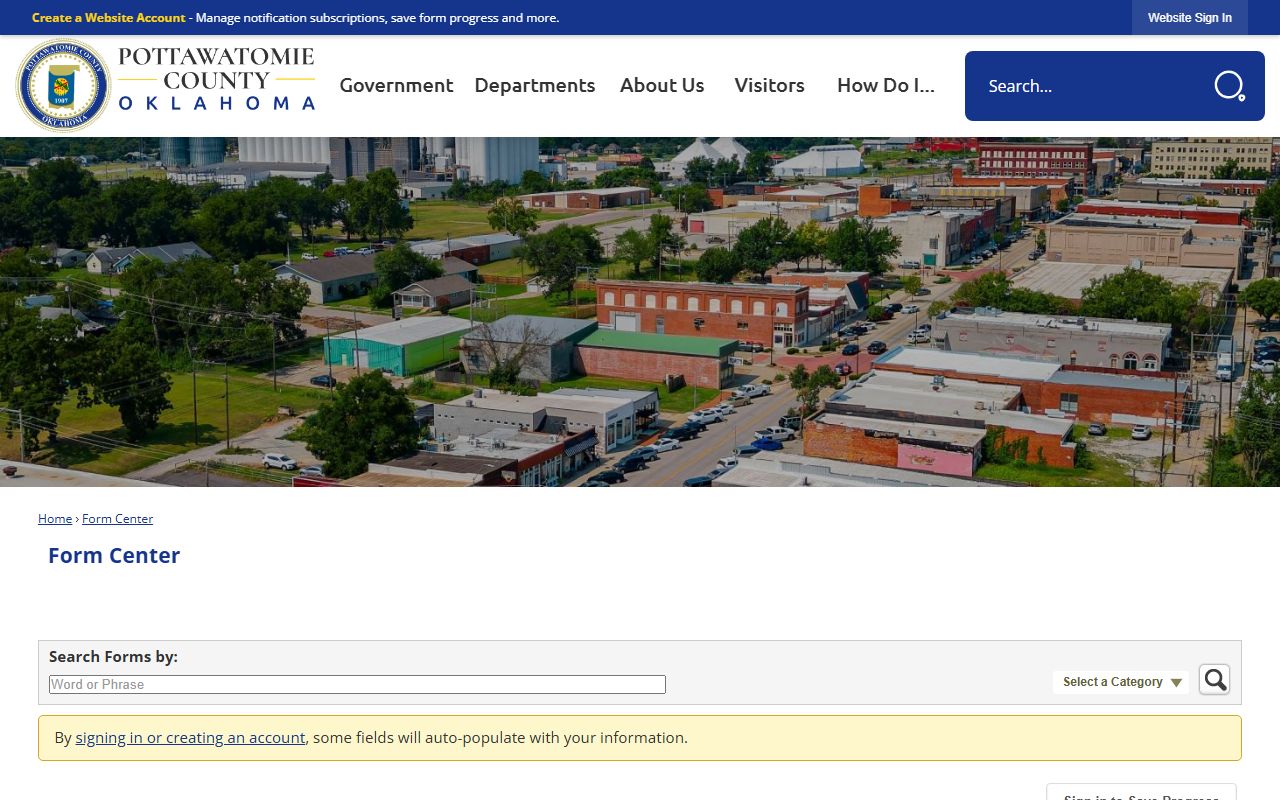
The form asks for the requesting party, an address, a phone, a fax, and an email. A checkbox set picks the record type, including case or arrest report, records check, photographs, and video. Optional fields add a case number, a party name, a location, and a date range. The form notes a fee for video, audio, and photos.
How Pottawatomie County Charges Get Filed After an Arrest
An arrest does not set the charges in stone. The District Attorney reviews the arrest and the evidence, then files a charging document. That filing is what opens the court case and lists the formal counts. Oklahoma uses three main charging documents, and the one used depends on the offense and the path the prosecutor takes.
| Complaint | Information | Indictment | |
|---|---|---|---|
| Filed By | Officer / Prosecutor | Prosecutor | Grand Jury |
| Common For | Misdemeanors | Many felonies | Serious felonies |
| Starts | The case | The case | The case |
Most state felonies in the county move forward on an information after a preliminary hearing or a waiver and bind-over. Misdemeanors often start on a complaint. A grand jury indictment is reserved for the more serious matters. In every county criminal caption, the filing party is the State of Oklahoma, because the District Attorney prosecutes on the public's behalf.
Pottawatomie County Charge Status and What It Means
Charges are not fixed once filed. They change as a case moves. A prosecutor may amend a count, reduce a felony to a misdemeanor, add a count, or drop one. A judge may dismiss a charge. Reading the status of each count tells you where things stand, so the table below defines the terms you will see most.
| Status | What It Means |
|---|---|
| Pending | The charge is filed and the case is still open, with no final outcome yet. |
| Amended / Reduced | The charge was changed, often to a lesser offense or a corrected count. |
| Dismissed | The court ended the charge, sometimes for evidence reasons or as part of a deal. |
| Nolle Prosequi | The prosecutor chose not to pursue the charge further. |
One arrest can lead to several charges, and each can carry its own status. A case may show one count dismissed while another ends in a plea. That is why the charge list and its status fields matter more than the original arrest count.
Status entries appear in the docket as dated events. A bind-over order, a plea of guilty summary of facts, or a dismissal each shows the day the court acted. Following those events in order tells the story of how charges after arrest were resolved, and it flags whether any count is still open.
Charges vs. Convictions
Being charged is not the same as being convicted. A charge is an accusation that a person committed an offense. A conviction is a finding of guilt by plea or by verdict. A charge record can list counts that were later dropped, dismissed, or resolved without a conviction. Always read the disposition before treating a charge as proof of guilt.
| Charge | Conviction | |
|---|---|---|
| Stage | Accusation | Verdict or plea |
| Burden of Proof | Probable cause | Beyond reasonable doubt |
| Public Record | Yes | Yes |
| Means Guilt | No | Yes |
Sealed vs. Expunged Records
Some arrest and charge records leave the public view. Sealing hides a file from public search while it still exists. Expungement goes further and treats the record under the law as though it never happened. Oklahoma sets who may seek an expungement in 22 O.S. Section 18. A dismissed charge does not clear itself, so a person still has to file for relief.
| Sealed | Expunged | |
|---|---|---|
| Visibility | Hidden from public | Treated as never existed |
| Law Enforcement | Limited access | Very limited |
| Eligibility | Set by court order in the District Court | Categories listed in 22 O.S. Section 18 |
The state criminal records office cannot pre-approve who qualifies. It directs people to the statute and to a petition in the District Court where the case arose. The framework appears on the OSBI criminal history expungement page.
Note: A dismissed or dropped charge can still appear in public records until a court grants a sealing or expungement order under the state statute.
Pottawatomie County Charge Codes and Severity Levels
Each charge ties to a statute, and that statute sets its class. Oklahoma sorts state crimes mainly into felonies and misdemeanors. A felony is the more serious class and can lead to prison. A misdemeanor is the lesser class, often punished by a fine, probation, or county jail. City ordinance violations are a separate, lower tier handled in municipal court.
Case prefixes signal the class on the docket. A CF prefix marks a criminal felony case. A CM prefix marks a criminal misdemeanor. A single arrest can produce several counts, and they may span different classes. One case might list a felony count and a misdemeanor count side by side, each with its own statute and possible penalty.
The offense or cause field carries the plain charge text. It often pairs the offense name with a disposition phrase, such as a guilty plea entry. The same field may cite the statute behind the count. Reading the statute reference helps you tell a serious felony from a routine misdemeanor when the labels alone are not clear.
Statewide Charge and Criminal History Lookups
County portals show one county's cases. Statewide tools pull a broader picture. The Oklahoma Department of Corrections runs an offender lookup for people serving a state sentence. Oklahoma VINE provides custody status and case notifications. The state criminal records office compiles criminal history for formal requests, separate from the free court portals.
To track custody status or set up alerts, use the state notification service. Open the Oklahoma VINE portal.
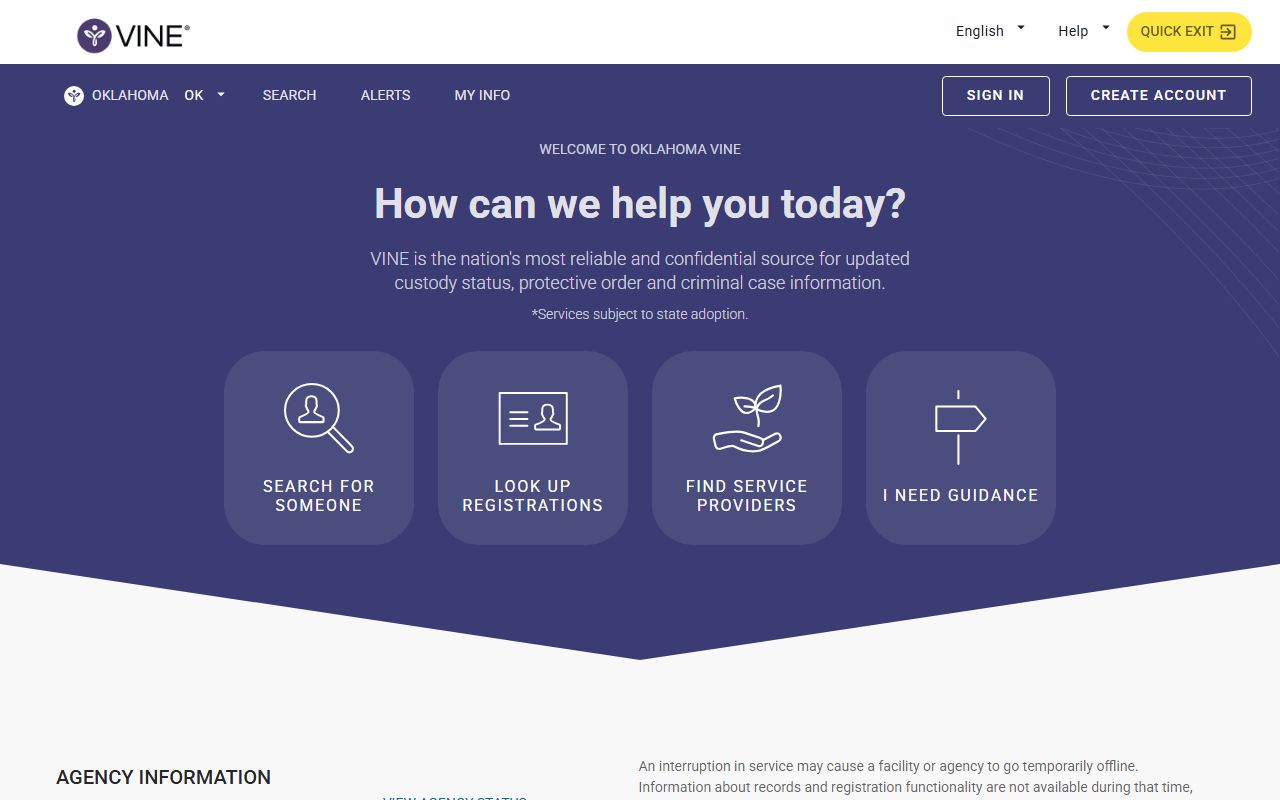
VINE tracks custody status and criminal-case events so a registered user gets notice of a change. For sentenced state prisoners, the corrections lookup adds case and sentence detail. Review it on the Oklahoma Department of Corrections page, which warns its data is abbreviated and not an exact account of a sentence.
Background Check Considerations
A quick arrest or charge lookup is not a formal background check. Reading one case tells you what one file shows. A regulated background check for hiring, housing, or credit follows federal rules and uses approved sources. An arrest by itself does not mean a conviction, so treat a single record as a starting point, not a verdict.
Important: This site is not a consumer reporting agency under the Fair Credit Reporting Act, and its records may not be used to decide credit, employment, housing, or insurance.
Restricted Charge Records in Pottawatomie County
Not every arrest or charge is open to the public. Juvenile charges sit outside the normal public docket and usually do not appear like adult cases. Sealed and expunged charges drop out of public search once a court orders it. Some dismissed counts and investigation-sensitive matters may be withheld until a case is resolved or unsealed.
Even on open cases, the court masks certain details. Social Security numbers, financial account numbers, protected addresses, and minor names are redacted. When a charge does not show online, the County Court Clerk can confirm whether it exists, is sealed, or is held at the counter, and the Sheriff's records request form covers arrest reports the portals do not carry.